How long a hot water tank actually lasts in Calgary
Written for Calgary homeowners · Last reviewed August 16, 2026
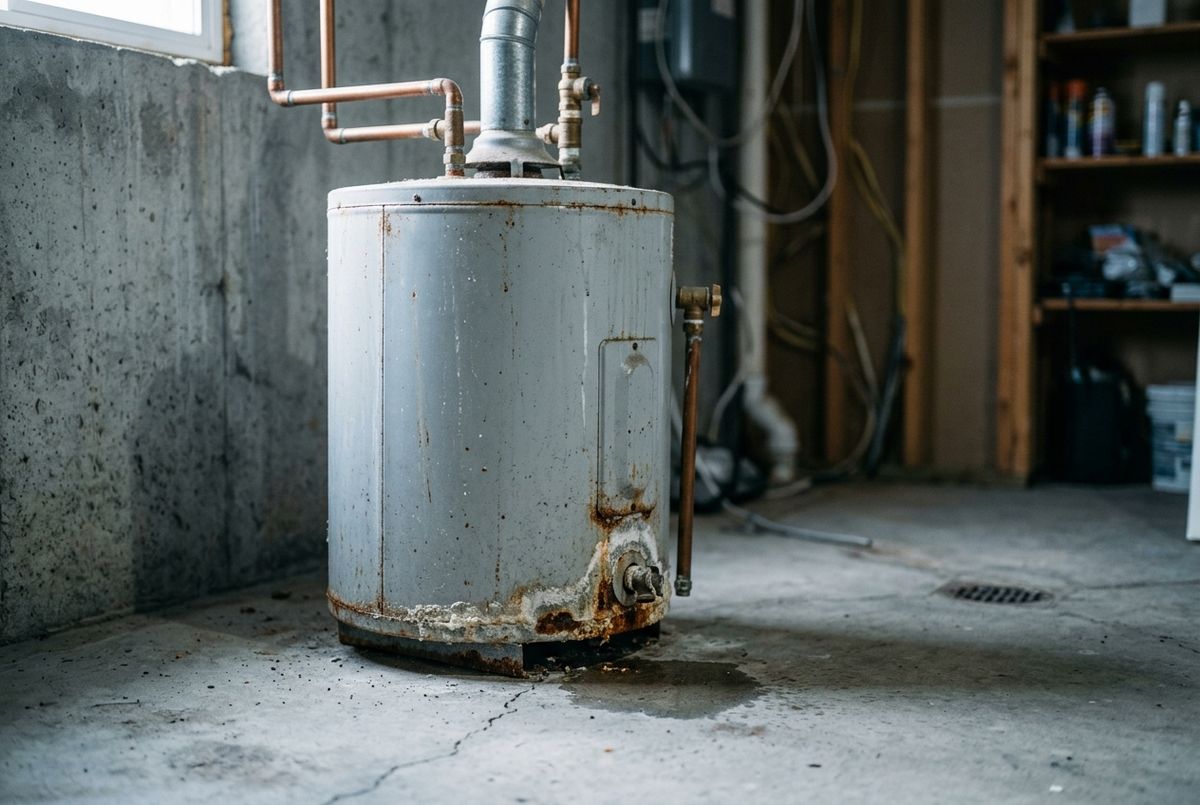
Short answer: plan on 8–12 years from a conventional gas or electric tank in Calgary. The ones that comfortably pass twelve are almost always the ones that got flushed occasionally and had the anode rod looked at once. Calgary's water hardness is the single biggest reason tanks here land at the lower end of what the manufacturer's marketing implies.
Be sceptical of anyone quoting a precise Calgary average, us included. There's no published dataset on residential water heater life in this city — what exists is manufacturer warranty tiers, rules of thumb imported from milder climates, and what tradespeople see in basements. Everything below is labelled so you know which you're reading.
What the warranty on the label is actually telling you
Tanks are sold here on 6-, 9- and 12-year warranties, and the temptation is to read that as a quality rating. It's closer to a bet. The longer-warranty models generally ship with a heavier or second anode rod and a better tank lining, because the manufacturer has to survive its own promise. On water as mineral-heavy as ours, that extra couple of hundred dollars up front usually buys you real service years rather than just a longer piece of paper — which is one of the few upsells in this trade we'll actually defend.
Worth knowing what the warranty doesn't cover, though: almost all of them cover the tank and the parts, not the labour to swap it, and certainly not the water damage if it lets go while you're at work.
Why Calgary tanks underperform the number on the box
This part is measurable, and it's the reason this page exists. Calgary's drinking water is hard — genuinely, near the top of the standard scale — and hardness is the mechanism that ages a water heater from the inside.
The City publishes hardness as milligrams per litre of calcium carbonate, separately for each of the two treatment plants. Across 2025 the ranges were:
| Treatment plant | 2025 hardness (mg/L CaCO3) | Converted (grains per gallon) | Where that sits |
|---|---|---|---|
| Bearspaw | 141–200 | ≈ 8.2–11.7 gpg | Hard |
| Glenmore | 181–274 | ≈ 10.6–16.0 gpg | Hard to very hard |
Source: The City of Calgary — Water quality and water hardness data. Full season-by-season table for both plants →
We can't tell you which plant serves your address, and neither can anybody else writing about this online — The City doesn't publish a neighbourhood map. If you want to know, call 311 and ask. For tank purposes it matters less than you'd think: both ends of that range are hard enough to do the damage described below.
What the scale actually does in there
Heat water and the dissolved calcium and magnesium come out of solution as solid scale. In a gas tank it settles on the floor of the vessel — precisely where the burner fires. That layer insulates the steel from the water above it, so the burner runs longer to hit the same thermostat setting and the steel runs hotter than the design assumed. Sustained overheating is what stress-cracks the glass lining, and once water reaches bare steel the anode rod is all that's left holding the line.
Electric tanks fail for the same reason by a different route: scale plates straight onto the elements, which then run hotter to push heat through their own crust and burn out early. Either way you get the same three outcomes — more gas or power for the same shower, less usable hot water as sediment occupies tank volume, and a shorter life. Treating the supply rather than the symptom is the argument people make for installing a softener, though an annual flush is the far cheaper first move.
Work out how old your tank really is
Almost nobody knows, and the answer changes what you should do next. Find the manufacturer's data plate on the front or side of the jacket and photograph it — you want brand, model number and serial number.
- Look at the first four characters of the serial number. Most manufacturers encode the build date there, commonly as year then week. A serial beginning 1832 often decodes to 2018, week 32.
- Then confirm it against that brand's own decoder. This is the step people skip. The format genuinely varies between manufacturers and some have changed schemes over the years — letters for months, the code buried mid-serial, different conventions entirely. Search the brand name plus "serial number date code," or phone their consumer line and read them the model and serial. Being three years out is easy, and it changes the decision.
- Check the joist and the wall beside the tank. Many Calgary installers leave a dated sticker or a permit tag. Install date beats manufacture date, because tanks can sit in a warehouse for a year before they're sold.
Once you have a real number, you know which conversation you're in: maintenance, monitoring, or budgeting.
The anode rod — the cheap part protecting the expensive one
Threaded into the top of every glass-lined tank is a sacrificial rod, usually magnesium or aluminium. It's more electrochemically attractive to corrosion than the steel around it, so the rod dissolves instead of your tank — meaning a part costing a few tens of dollars is what stands between you and a replacement plus whatever the water ruins on the way out.
Mineral-rich water is more conductive, which accelerates the reaction — so Calgary chews through anode rods faster than soft-water cities do. Checking the rod around year five and replacing it if it's more than about 60% gone is the highest-value maintenance item on a tank here. Do it once and you're genuinely buying years.
Two honest caveats. On a tank that's sat for a decade in hard water the rod is often seized solid, and forcing it risks damaging the tank head — at that point put the money toward replacement instead. And if you get a rotten-egg smell in the hot water only, that's usually a reaction between a magnesium rod and bacteria in the tank, not a water supply problem; an aluminium-zinc rod is the normal fix.
Flushing: how often, and when to leave it alone
Once a year is the standard, and on the harder Glenmore-range end of the city twice a year on a gas tank is defensible. The point is to drag the sediment out before it's thick enough to insulate the burner surface, so the tank keeps heating efficiently and the lining stops cooking itself.
Flushing an old, never-flushed tank can be what starts the leak
This is the bit the maintenance blogs skip. On a tank past about ten with a decade of untouched sediment, two things commonly go wrong. The drain valve is usually plastic and often won't reseat once opened, so you finish the job with a drip you didn't have that morning. And shifting the sediment can uncover a thin, already-corroded patch of tank floor the scale was effectively plugging. Plumbers regularly see tanks that started leaking within a week of their first-ever flush.
Rule of thumb: under six years old, flush it and keep flushing it. Past ten and never flushed, leave it and put the money toward the replacement instead. In between, have someone assess the tank's condition before opening that valve, not after.
The symptom ladder, in order of how worried to be
| What you're noticing | What it usually means | How urgent |
|---|---|---|
| Rumbling, popping or kettling when the burner fires | Sediment bed on the tank floor; trapped water flashing to steam underneath it | Not an emergency. It's a maintenance prompt on a young tank, a budget prompt on an old one. |
| Hot water runs out noticeably faster than it used to | Sediment occupying usable volume, or a broken dip tube mixing cold into the outlet | Book a look. Cheap if it's the dip tube. |
| Rusty or brown water from hot taps only, cold runs clear | Anode rod fully consumed and the tank interior is now corroding | Weeks to months of warning. Start pricing replacement now, not later. |
| Rusty water from both hot and cold | More likely your supply piping than the tank — classic in pre-1960 homes with galvanized lines | Different problem. See low water pressure. |
| Relief valve dripping or discharging | Either a failed valve (cheap) or genuine excess pressure or thermal expansion (needs diagnosing) | Get it diagnosed. Never cap or plug it — that valve is the tank's only safety device. |
| Damp base, rust staining on the floor, a puddle that returns | The steel vessel has rusted through | Usually terminal. Plan replacement immediately — see what to shut off if it's actively leaking. |
The pattern worth internalising: noise is the tank asking for attention, rust in the hot water is the tank giving you notice, and water on the floor is the tank telling you it already happened.
Repair or replace
Usually repair
The failure is a component bolted to the outside — thermocouple, gas control valve, thermostat, upper or lower element, relief valve, dip tube — and the tank is under about eight. You get years more out of an appliance for the price of parts and a couple of hours, which is almost always the better spend.
Usually replace
The vessel itself is leaking, or the tank is past ten and needs a major component. Our rough line is 40%: once a repair costs more than about 40% of a replacement on a tank that age, you're paying real money to defer a bill you'll still get.
Once you've decided it's due, the money question moves on: what the replacement itself costs and what makes one Calgary quote hundreds more than another. We've broken down hot water tank replacement costs here, including why the venting decides the price more than the tank does.
Two things to sort out before you commit to a replacement. First, permits: a straight like-for-like swap generally isn't a plumbing-system alteration, but changing size, location or venting generally is, and homeowners cannot pull a gas permit in Calgary unless they hold gasfitter certification and live at the address. The permit rules are here. Second, get more than one quote and make each itemise the tank, the labour, the permit and disposal of the old unit — that's how you find out whether you're comparing like with like. Our page on what Calgary plumbers charge explains why every published rate in this city is a self-report.
Why the January tank costs more than the September one
Same tank, same house, different bill. Three reasons, and none of them are a plumber taking advantage of you.
- Emergency rates are real rates. Plumbing companies around Calgary publish after-hours figures of $150–$250 an hour against roughly $85–$150 for regular hours. Those are self-reported numbers, not an authoritative source — there isn't one — but the gap between the columns is the honest signal.
- In a cold snap you're in a queue. The week it hits −30 °C, every plumber in the city is triaging burst pipes and frozen services. Your tank is competing with flooding basements for the same trucks, and you'll wait.
- You lose the choice of tank. Replacing under pressure means taking what's on the truck or in stock that afternoon, not the model with the better warranty and the second anode rod. That decision follows you for the next decade.
Rate ranges as self-reported by Mr. Mike's Plumbing (updated December 2025). No authoritative public source for Calgary plumber rates exists.
Failures genuinely do cluster in winter: incoming water is at its coldest, the tank runs a wider temperature swing to deliver the same shower, and a marginal vessel gives up under that load. If yours is past ten and showing rust in the hot water, replacing it in the fall isn't over-caution — it's buying the same appliance at the cheaper end of the year.
Not sure whether yours is due?
Send us a photo of the data plate and tell us what it's doing. We'll tell you roughly how old it is, whether that's a repair or the end, and what a replacement should cost — before anyone comes out. If it has another few winters in it, we'll say so.
Questions Calgary homeowners actually ask
My tank is 10 years old and working fine. Do I have to replace it?
No. Age on its own is not a failure. Plenty of Calgary tanks run past twelve years, and the ones that do are almost always the ones somebody looked after — flushed now and then, anode rod checked at least once.
What changes at ten is your risk profile, not your tank. From there on, the sensible thing is to stop treating it as a permanent fixture and start treating it as a thing that will fail on a date you don't control. Know where the shut-offs are, keep anything valuable off the floor around it, and have a rough idea of what a replacement costs so you're not making that decision at 11 p.m. with water spreading. If it's on carpet or above a finished basement, move it up your list.
How do I find out how old my tank actually is?
Look for the manufacturer's data plate — usually a sticker on the front or side of the jacket. You want the brand name, the model number and the serial number. Most manufacturers hide the build date in the first four characters of the serial, commonly as year plus week of the year, so a serial starting 1832 often means 2018, week 32.
The catch is that the format genuinely varies by brand, and some of them have changed schemes over the years. Some use a letter for the month, some put the code somewhere else entirely. Don't guess — being three years out changes the whole decision. Take a photo of the plate, then look up that specific brand's own date-code guide, or phone their consumer line and read them the model and serial. Also check the joist or the wall beside the tank: a lot of Calgary installers leave a dated install sticker, and install date is really the number you care about.
I've never flushed my tank. Should I do it now?
Honestly? If the tank is well past ten and has never been flushed, probably not, and any plumber who tells you it's risk-free is glossing. Two things go wrong on old tanks. The drain valve is usually plastic, and once you open it after a decade of sitting there it often refuses to seat again, so now you've got a dripping valve you didn't have this morning. And disturbing a thick sediment bed can uncover a thin, already-rusted patch of tank floor that the scale was effectively plugging.
If your tank is under about six years old, flush it, and keep doing it — that's genuinely worth the half hour. If it's older than that and has never been touched, the better use of your money is usually to put it toward the replacement you're going to be making anyway. Ask a plumber to look at the tank's actual condition before flushing it rather than after.
My tank makes a popping and rumbling noise when it heats. Is that dangerous?
Not dangerous in the sense of about to explode — that's what the temperature and pressure relief valve on the side is there to prevent. But it is your tank telling you something specific: there's a layer of hardness scale sitting on the bottom of it, water is getting trapped underneath, and when the burner fires that trapped water flashes to steam and forces its way up through the sediment. That's the popping.
The part that matters is what's happening underneath the noise. That scale layer insulates the steel floor of the tank from the water above it, so the burner has to run longer to reach the same thermostat setting and the steel runs hotter than it was designed to. That's what cracks the glass lining, and once bare steel meets water you're counting down. Rumbling on a five-year-old tank is a maintenance prompt. Rumbling on a twelve-year-old tank is a budget prompt.
Is it worth repairing an older tank or should I just replace it?
Depends entirely on what failed. If it's a part bolted to the outside of the tank — thermocouple, gas control valve, thermostat, a heating element, the relief valve, the dip tube — that's a repair, and on a tank under about eight years old it's usually the right call. Those are hours and parts, not a new appliance.
If the tank itself is leaking — moisture at the base, rust weeping from a seam, a puddle that keeps coming back — there is no repair. A steel tank that has rusted through gets replaced, full stop, and anyone offering to patch it is selling you a delay. The grey zone is a ten-plus-year-old tank with a significant component failure. The rough test we use: if the repair is heading past about 40% of what a replacement costs, you're paying good money to keep an appliance that's already on borrowed time.
Do I need a permit to swap out my own hot water tank in Calgary?
The plumbing side and the gas side are two different questions, and it's the gas side that catches people out. As of August 2026, The City requires a plumbing permit when a plumbing system is constructed, extended or altered. A straight like-for-like swap with no change to the piping usually isn't an alteration; changing the size, the location or the venting usually is.
Gas is stricter. A homeowner cannot pull a gas permit in Calgary unless they hold Alberta first- or second-class gasfitter certification and live at the address — otherwise a licensed contractor has to pull it. So for the vast majority of people with a gas tank, the connection is not a DIY job regardless of how confident you are with a pipe wrench. We've laid the whole thing out here, and it's worth reading before you buy a tank at a big-box store.