Emergency plumber in Calgary — and how to tell whether you actually need one tonight
Written for Calgary homeowners · Last reviewed August 16, 2026
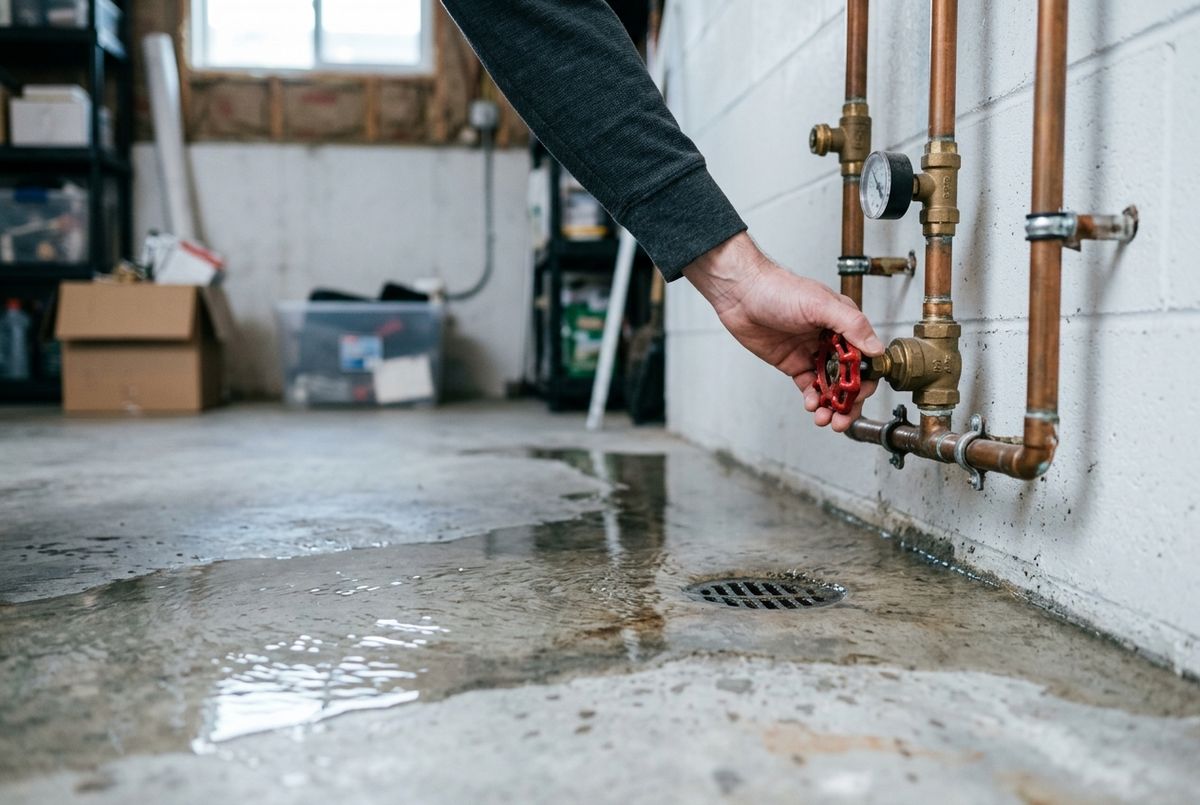
If water is moving through your house right now, stop reading and shut off the main — basement, wall facing the street, usually near the water heater, clockwise until it stops. Then come back. Everything below assumes the water is under control.
Emergency plumbing across Calgary
Burst pipes, sewage backups, flooding and no-water calls across Calgary and the immediate surrounding area. A real person, an honest read on how fast someone can actually be at your door, and the after-hours rate said out loud before anyone gets in the van — so you never find out what it costs on the invoice. Nights and weekends are covered by [CONFIRM AFTER-HOURS COVERAGE]; ask us on the phone rather than assuming, and ask any other plumber the same thing.
[LICENCE / WCB / INSURANCE INFO] — plumbing is a compulsory certification trade in Alberta, so the person in your home legally has to hold the ticket. [ADD REAL REVIEWS HERE]
Short answer: A genuine plumbing emergency is water or sewage you cannot stop, no water in deep cold, or any smell of gas. Almost everything else — a dripping tap, one slow drain, a running toilet, a weeping valve — is cheaper and no more dangerous on Tuesday morning. Use the table below before you pay an after-hours rate.
Is this actually an emergency? Start here
Most emergency plumbing pages in this city are built to make you call immediately. This one isn't. Plenty of after-hours calls are for things that would have been fine until business hours, and the homeowner paid a premium for not knowing that. So here's the honest split.
| Call now | Why it can't wait |
|---|---|
| Active flooding you can't stop | A burst supply line at household pressure moves a lot of water fast, and damage is cumulative by the hour |
| Sewage backing up into living space | It's a health hazard, not just a mess, and every fixture you use makes it worse |
| Any smell of gas | Leave the building first and call your gas utility's emergency line or 911 from outside — before you call a plumber |
| No water at all in deep cold | Likely a frozen service line, and the longer it sits frozen the higher the odds it splits |
| Water heater actively pouring water | A failed tank empties continuously into your mechanical room and won't stop on its own |
| Water near the electrical panel or live circuits | Genuine safety risk — kill the breakers, don't wade in |
| Main shut-off valve won't close | You've lost your only means of stopping a future leak |
| Safe to wait for business hours | What to do tonight instead |
|---|---|
| Dripping tap or shower head | Bucket under it. Note whether it's hot or cold side for the plumber |
| One slow drain, everything else fine | Stop using that fixture. Don't pour chemical cleaner in before someone augers it |
| Toilet running constantly | Close the small stop valve on the wall behind the toilet. Problem paused, no cost |
| Weeping shut-off valve or supply line | Towel and a container, check it before bed. If it worsens quickly, reassess |
| No hot water, house otherwise fine | Annoying, not damaging. Start with the no hot water checklist |
| Low water pressure that's been creeping down for months | It's been happening for years. It'll keep until morning — here's why it happens here |
| Small water stain on a ceiling, not spreading | Mark the edge with pencil and check in two hours. Spreading changes the answer |
Gas is a different call. If you smell gas, don't flip switches, don't use the phone inside, don't look for the source. Get everyone out, then call your gas utility's emergency line or 911 from outside. A plumber is the second call, not the first — and note that plumbing and gasfitting are separate tickets in Alberta, so if the work is gas you want someone who holds the gasfitter certification, not just a plumber. We explain that split on our gas line permits page.
The first five minutes matter more than our drive time
Whatever the response time turns out to be, what you do before anyone arrives determines how much this costs. In that order:
- Shut off the water at the main. Basement, low on the street-facing wall, usually near the meter and the hot water tank. Clockwise on a round handle, quarter turn on a lever. If it's one fixture only, there's a smaller stop valve right at it and you can isolate without shutting the house down. You cannot operate the curb stop at the property line — that valve is The City's and only a City crew can turn it.
- Kill the power to wet areas. Breakers off before you walk into standing water in a finished basement. If the panel is in the flooded area, stay out and call the utility.
- Shut the gas control off if it's the water heater. A gas tank that's lost its water and keeps firing is a worse problem than a leaking one. Gas control knob to off, then close the cold water inlet valve on top of the tank.
- Photograph everything before you clean up. Wide shots of the room, close-ups of the failed part, the water line on the wall, the soaked contents. The most valuable unpaid five minutes in the whole event — an adjuster assesses what they can see, and a floor you've already mopped proves nothing.
- Then start moving water. Wet vac, towels, fans, contents up off the floor. Speed beats thoroughness — standing water wicks into drywall while you decide.
If it's a frozen or burst pipe, the full thaw-versus-burst decision tree is on our frozen and burst pipes page. If it's drains backing up in a cold snap, check whether you've got a frozen sewer line before anyone augers anything.
How fast can anyone really get here?
On an ordinary Tuesday, same-day is realistic and a couple of hours is common. In the week a cold snap breaks — it hits −30 °C, then chinooks back above freezing — every plumbing company in this city is triaging, and anyone giving you a hard number that week is guessing.
An honest answer sounds like: "Three ahead of you, realistically late afternoon, here's what to do meanwhile, I'll call if that changes." A dishonest one is a confident 60-minute promise from a call centre with no idea where the vans are. Judge a company on whether they'll tell you something you don't want to hear — it's the same quality you're relying on when they tell you what a repair does and doesn't need.
Same on the City side. If sewage is backing up, call 311 too — the agent works out whether it looks like your internal plumbing or possibly City infrastructure. Note that City crews will not move furniture, pull back carpet, remove toilets or make holes in drywall to find the source, and if the blockage is on private property you'll be told to call a plumber.
How after-hours pricing actually works
There is no authoritative public source for Calgary plumber rates. No industry survey, no City regulation of pricing, and every figure online is a company's self-report about itself. Anyone quoting a precise city-wide average is making it look more solid than it is.
For scale rather than accuracy: one Calgary company publishes roughly $85–$120 an hour for independent plumbers, $95–$150 for plumbing companies, and $150–$250 for emergency and after-hours work. One company's self-reported view, not a benchmark.
Source: Mr. Mike's Plumbing — What do plumbers charge per hour in Calgary (updated December 2025). Self-reported; not an independent survey.
What varies more than the hourly rate is the structure around it, and that's what to ask about on the phone:
- Is there a call-out or trip charge separate from labour? This is where after-hours pricing hides. Ask for the number, not "there may be a fee."
- Is there a minimum billable time? One hour, two, or a flat after-hours minimum — it changes the bill for a twenty-minute fix a lot.
- When does the after-hours rate start and stop? Evenings, weekends and statutory holidays are often priced differently from each other.
- Am I paying for diagnosis, and does it come off the repair? Finding a hidden leak or camera-ing a line is real work and gets billed. Reasonable is knowing the number first and having it credited if you proceed.
- What do I owe if I decide not to go ahead? Ask this one explicitly. The trap around this city is the "free estimate" that becomes a service call charge once the van is in the driveway.
- Is it quoted or hourly? If the job can be scoped on arrival, a fixed price protects you from the clock. If it genuinely can't be, hourly is honest — but you should be told which before work starts.
Our full breakdown of what plumbing work costs in Calgary, and why most published figures deserve scepticism, is on the pricing page.
What to have ready when you call
Two minutes of prep cuts a lot of guessing out of the visit, and sometimes tells the person on the phone you don't need one at all.
What's happening, specifically
Where it's coming from, clean or foul, how fast, how long. "Wet ceiling under the upstairs bathroom, started an hour ago, spreading" is worth ten times "there's a leak."
What you've already done
Main off or on. Breakers off. Fixtures isolated. Anything you've poured down a drain — especially chemical cleaner, which matters for whoever opens that line.
What the house is
Age and neighbourhood, finished or unfinished basement, whether there's a suite, whether it's happened before. A 1958 bungalow and a 2015 build fail in completely different ways.
Access
Where to park, lane or front, whether the mechanical room is behind stored boxes, whether there's a dog. Sounds trivial; saves real minutes at 2 a.m.
Photos, if you can
A photo of the failed part texted ahead often means the right materials are on the van the first time — one visit instead of two.
Your questions about price
Call-out fee, minimum time, what you owe if you don't proceed. Ask before someone drives out, not after — that's when you have the choice.
Why this page isn't trying to be the number one result
Honesty about our own position, since the rest of this site is built on being straight with people. "Emergency plumber Calgary" is dominated by very large operators with very large budgets, plus the map pack. We're not going to outspend them for that phrase and pretending otherwise would be silly.
So this page is built for the person already standing in a wet basement deciding what to do. Everything above is what we'd want a family member to have in that moment — including the part where the honest answer is "put a bucket under it and call us Tuesday." If that costs a few after-hours callouts, that's the trade, and it's the same principle behind the rest of our Calgary plumbing guides.
If you're evaluating any emergency plumber tonight, including us, the fastest check is their Google Business Profile reviews — and read the two-star ones, not the five-star ones. Two-star reviews are where after-hours billing surprises show up.
Tell us what's happening and we'll tell you if it can wait
A straight read on whether this needs someone tonight or Tuesday morning, and the rate before anyone gets in the van — so you decide on cost while you still have the choice. The conversation is free either way.
Questions Calgary homeowners actually ask
Is this actually an emergency, or am I about to pay after-hours rates for nothing?
Rough rule: if water or sewage is moving and you can't stop it, if there's no water at all in deep cold, or if you can smell gas, that's tonight. A dripping tap, one slow drain, a toilet that won't stop running, or a weeping shut-off valve is a Tuesday morning problem — put a bucket under it, or close the little stop valve on the wall behind the toilet, and go to bed.
The two that catch people out in both directions: no hot water feels like a crisis and usually isn't damaging anything, while a small ceiling stain feels minor and can be a live leak. Mark the edge of the stain with a pencil and check it in a couple of hours. If it's grown, that's changed the answer.
Where is the main water shut-off in a Calgary house?
Basement, low on the wall facing the street, usually within a couple of metres of the water meter and often near the hot water tank. In an older inner-city bungalow it might be tucked behind a furnace room partition; in a 1980s suburban home it's typically in an unfinished corner of the mechanical room. Round handle turns clockwise; lever turns a quarter turn so it sits across the pipe.
Go and find it this week, before you need it, and turn it off and on once to make sure it isn't seized — old gate valves in this city seize all the time. Discovering a stuck valve while the ceiling is coming down is the difference between a wet floor and an insurance claim. There's also a curb stop out by the property line, but that one belongs to The City and no homeowner or plumber is allowed to operate it.
How fast will someone actually get here?
On a normal day, same-day is realistic and a couple of hours is common. In the week a deep cold snap breaks, every plumbing company in Calgary is working through a queue and anyone who promises you a firm 60 minutes in that week is guessing. We'd rather tell you "three ahead of you, realistically late afternoon" and be right than tell you what you want to hear.
What matters more than the drive time is the first five minutes at your end — main off, breakers off for wet areas, photos taken before anything gets cleaned up. That's what actually decides how much this costs you.
How much does an after-hours plumber cost in Calgary?
Nobody can give you an authoritative figure, and be suspicious of pages that do — there's no industry survey and no regulated rate here, so every number online is a company describing its own pricing. For scale, one Calgary company publishes roughly $150 to $250 an hour for emergency and after-hours work, versus $95 to $150 for a company during normal hours. That's one firm's self-report, not a benchmark.
The bigger variable is the structure. Ask on the phone: is there a call-out charge on top of labour, is there a minimum billable time, when does the after-hours rate start and stop, and what do I owe if I decide not to go ahead once you've looked at it. Any company that won't say those numbers out loud before driving over is telling you something.
Should I call 311 or a plumber when sewage backs up?
Call 311 first. The agent works out whether it looks like your internal plumbing or possibly City infrastructure, and knowing which side of the property line the problem is on before anyone digs saves real money. If your neighbours are backing up the same evening too, that points at the main rather than your line.
Just know the limits. City crews won't move furniture, pull back carpet, remove toilets or make holes in drywall to find the source, and if the blockage turns out to be on private property they'll advise you to call a plumber. So in practice it's often both calls — 311 first, plumber second. Meanwhile, stop using water in the house entirely; every flush and every load of laundry is going straight back onto your floor.
I smell gas. Do I call you?
No — not first. Get everyone out of the building. Don't flip light switches, don't unplug anything, don't use the phone inside, don't go hunting for the source. Once you're outside, call your gas utility's emergency line or 911. That's the call that matters.
A plumber comes after the gas has been made safe. Worth knowing that in Alberta, plumbing and gasfitting are two separate tickets — a Red Seal plumber is not automatically a gasfitter. If the repair touches a gas line, ask specifically who's coming and what certification they hold, because the wrong answer is a job that fails City inspection.