Plumbing is a compulsory trade in Alberta — and you can still legally do your own
Written for Calgary homeowners · Last reviewed August 16, 2026
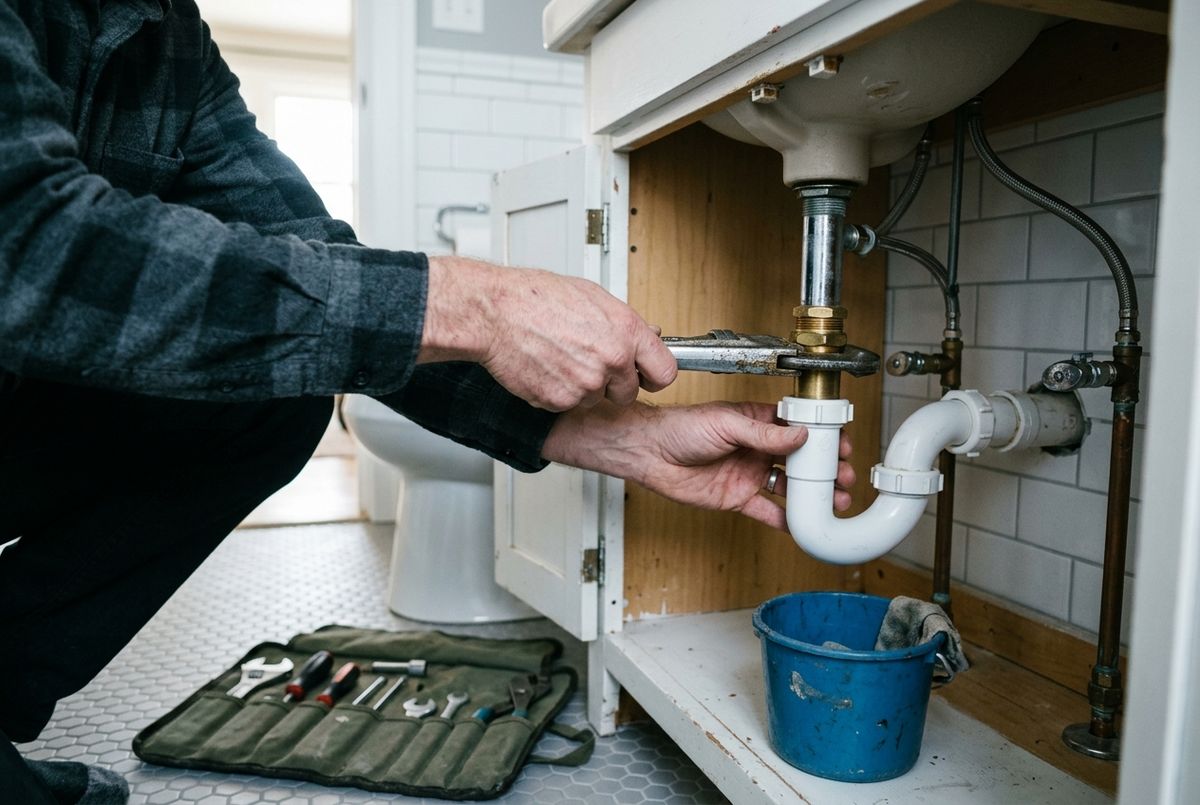
Short answer: Yes, you can legally do plumbing work in your own Calgary home — even though plumber is a compulsory certification trade in Alberta. The trade rules carry an owner exemption for property you own and intend "only for personal and not-for-profit use." That exemption settles who may hold the wrench. It does not excuse you from the City of Calgary's permit and inspection rules, and it does not extend to gas work, where a homeowner is effectively locked out entirely.
Almost every page on this question gets one half and misses the other. Some say plumbing is a restricted trade in Alberta and stop there, leaving you thinking a licensed plumber has to change your kitchen faucet. Others say homeowners can do whatever they like on their own house, which is how people end up with an unpermitted basement bathroom that torpedoes a sale eight years later. Both halves are true at once.
The two rules that look like a contradiction
Rule one: plumber is a compulsory trade
Alberta divides its trades into optional and compulsory certification. Plumbing is compulsory. That means the restricted activities of the trade may only be performed by someone holding a journeyperson certificate, a recognized equivalent trade certificate, or a registered apprentice working toward one. It is not a professional courtesy or an industry preference — it's the licensing framework, and it's why the person who shows up from any legitimate company can name their ticket when you ask.
For scale: the apprenticeship runs four periods, each requiring 1,560 hours of on-the-job experience plus eight weeks of classroom instruction.
Source: Alberta Trade Secrets — Plumber trade profile
Rule two: there is an explicit owner exemption
The same regulatory framework lists classes of individuals who may perform those restricted activities without the certificate. One of them is the owner. In the province's own wording, the restricted activities may be performed by any individual who is performing the restricted activity "in respect of any property that the individual owns, has possession of or control over, and intends only for personal and not-for-profit use by the individual."
Source: Alberta Trade Secrets — Classes of individuals, Plumber
Reading them together
There's no contradiction once you see what each rule is aimed at. The compulsory designation regulates selling plumbing work to other people. The exemption removes you from that restriction when the property is yours and the benefit is yours. You cannot plumb your neighbour's house for cash. You can plumb your own.
So the real question was never "am I allowed?" It's "what does the City need to see?" — a separate authority with separate rules.
The City's homeowner permit is a second, stricter test
The City of Calgary issues a homeowner plumbing permit, but only if you clear all three of these:
- You own the home.
- You live in it, or intend to reside in it. Rental property does not qualify.
- You are doing the work yourself. You cannot pull a permit on a contractor's behalf, and no, this is not a loophole for hiring your cousin.
Two structural exclusions catch people out: the permit isn't available for apartment-style condominiums at all, and an individual rowhouse or townhouse unit needs condo board authorization first.
The fee is $116.50 — a $112 permit fee plus a $4.50 Safety Codes Council levy, with no processing fee on top. Fees increase annually on January 1, so confirm the current number when you apply rather than trusting this page in three years. For comparison, a contractor pulling a trade permit pays $112 processing plus $9.79 per $1,000 of construction value, which is part of why a permitted job quoted by a company costs more than the sticker on the parts.
Source: The City of Calgary — Homeowner electrical and plumbing permits
What you're buying for $116.50 isn't permission. It's a qualified inspector looking at your rough-in before it disappears behind drywall, and a record that the work exists and passed — which is what protects you at resale and gives you something to point at if a claim ever gets awkward.
What needs a permit, and what genuinely doesn't
The City's test is whether the plumbing system is being constructed, extended or altered. Changing what hangs off an existing connection is not the same as changing the system.
| The job | Permit? | Why |
|---|---|---|
| Replace a faucet, toilet, sink or existing fixture in place | No | Explicitly listed as not requiring a plumbing permit |
| Repair a leak in a water distribution or drainage line | No | Repair, not alteration |
| Clear a blockage in the drainage system | No | Maintenance — see drain cleaning |
| Add a bathroom, laundry or wet bar where none existed | Yes | The system is being extended |
| Move a fixture to a new location | Yes | New drain and vent = alteration |
| Replace the water or sewer line in or around the home | Yes | Called out specifically — see who owns which pipe |
| Install a backwater valve or other backflow prevention device | Yes | A plumbing permit is required for backflow devices |
| Anything that alters a gas line or its venting | Gas permit | And you almost certainly cannot pull it — see below |
| Furnace, ductwork, HVAC or mechanical work | Not you | Homeowners cannot do HVAC/mechanical work in Calgary |
The two most common real-world questions land on opposite sides of that line. A like-for-like hot water tank swap looks a lot like a fixture replacement — but the gas and venting attached to it are what pull it back into permit territory. And a basement bathroom is an extension of the system every time, no exceptions.
Gas is where the exemption runs out
A Calgary homeowner cannot pull a gas permit. The only exception is a homeowner who personally holds Alberta first- or second-class gasfitter certification, resides or intends to reside at the work location, and applies in person with proof of qualifications. For everyone else, a licensed contractor must take out the permit and do the work.
There is one narrow carve-out worth knowing: you may pull a permit to install a gas fireplace insert yourself, but a licensed gas fitter still has to make the gas line connection. You can do the box; you cannot do the gas.
Sources: City of Calgary — Homeowner permits and City of Calgary — Plumbing and gas permits
People assume gas rides along with plumbing. It doesn't. Gasfitting is a separate certification in Alberta — a Red Seal plumbing endorsement requires passing both the Plumber and the Gasfitter Class B interprovincial exams precisely because they're two different bodies of knowledge. When booking work that touches both, ask which tickets the person arriving holds. More on Calgary gas line permits →
How the permit and inspections actually go
This is the part people imagine as bureaucratic and it really isn't. Two visits, booked by you, at times you choose.
- Apply for the homeowner plumbing permit before you start. Applying after the fact is possible but it puts you in the position of uncovering work you already finished, which is exactly the expensive outcome the permit exists to prevent.
- Do the rough-in. All drainage, venting and water lines installed and properly supported, and the bathtub or shower valve in. Nothing gets covered yet — no drywall, no backfill, no insulation over the pipes.
- Book the rough-in inspection. Through 311 or the City's online inspection booking. Next-day requests generally need to be in by 2 p.m. Someone 18 or older has to be at the property to let the inspector in.
- Finish and book the final. All fixtures and equipment installed, any piping left for future fixtures sealed with approved plugs or caps, and bathtub and shower water not exceeding 49 °C — that last one catches DIYers who set a tank thermostat by feel.
Source: The City of Calgary — Homeowner electrical and plumbing permits
Failing an inspection is not a disaster. Inspectors tell you what's wrong, you fix it, they come back. The people who get hurt are the ones who never booked the first visit and buried a mistake in a wall.
The rental and secondary-suite question
The provincial exemption applies to property the owner intends "only for personal and not-for-profit use." On the plain meaning of those words, work in a unit you intend to rent out doesn't look like personal, not-for-profit use. The City's homeowner permit test points the same direction, and there it's unambiguous: the home cannot be a rental property.
We're presenting the provincial half as a reasonable reading of the wording, not settled law — we're not aware of a definitive published interpretation either way. If your project is heading toward a legal secondary suite, contact Alberta Apprenticeship and Industry Training or a lawyer and get it confirmed for your situation before you buy materials. This is the sort of thing that is cheap to ask about in advance and expensive to be wrong about later.
As of August 2026 that's where the question stands. Suites also bring in a separate technical requirement most renovators discover far too late: a normally-open backwater valve may only serve one dwelling unit, so one valve can't protect both the main house and the suite. The detail on that is here →
What it actually costs you to skip the permit
Nothing, usually, for years. That's why so many people do it. The bill arrives at one of two moments.
When you sell
A permit leaves a record and no permit leaves nothing — which feels like an advantage right up until a buyer's inspector is standing in a bathroom that isn't on any permit. From there you're negotiating against your own renovation, and the discount they ask for is never $116.50.
When you claim
If a joint you made lets go, your insurer will want to know who did the work and whether it was inspected. One Alberta brokerage notes that clogs and damage from high water pressure are generally treated as maintenance and likely not covered at all. Don't guess at your own policy — ask your broker in writing now, while nothing is leaking.
Source: Acera Insurance — burst pipes and Alberta home insurance (brokerage commentary, not an insurer policy)
Where DIY genuinely makes sense
We install plumbing for a living and we still think you should do some of this yourself. It's your house and the money is yours.
- Fixture swaps. Faucets, toilets, shower heads, supply lines, angle stops. No permit, well-documented, and the failure mode is a slow drip you catch in an hour.
- Isolation and shut-offs. Knowing where your main valve is and being willing to use it is worth more than any repair skill. Note that the curb stop out front belongs to The City — that one is not yours to operate.
- A permitted basement rough-in, if you're methodical. The inspections are the safety net. People do this successfully in Calgary all the time.
Where we'd push back: anything on gas, anything on the buried service line, and anything where a mistake floods finished space while you're at work. Skill isn't usually the limiting factor — time and the cost of being wrong are. To sanity-check the maths, here's what plumbers around Calgary actually charge and where those numbers come from. For the wider picture, our main Calgary plumbing page covers what tends to go wrong in this city and why.
Doing it yourself and want a second opinion first?
Call and describe the job. If it's inside the DIY line we'll tell you that and point you at what to watch for — no charge, no booking attached. We'd rather you get it right than get it from us.
Questions Calgary homeowners actually ask
So is it actually legal for me to plumb my own house, or not?
Legal, yes, for your own home that you live in. The confusion comes from the fact that two different governments are involved and people mash their rules together. The province decides who is allowed to do the work, and it carves out an exemption for owners working on their own property for personal, not-for-profit use. The City of Calgary decides whether the work needs a permit and an inspection, and that's a completely separate question with its own form and its own fee.
Where people get burned is assuming that because the province lets them do it, the City doesn't need to know. Those are two different hurdles and you have to clear both. The good news is the second one costs $116.50 and a couple of appointments — it is genuinely not the obstacle people build it up to be.
Do I need a permit just to change a tap or a toilet?
No. The City is explicit that a plumbing permit is not required to replace existing faucets and fixtures, repair a leak in a water or drainage line, or clear a blockage. Swapping a fifteen-year-old kitchen faucet, putting in a new toilet where the old one sat, replacing a shut-off valve that's weeping — none of that needs paperwork.
The line is whether you're changing the system or just changing what's hanging off it. Same location, same connections, same drain and vent? That's a fixture swap. Running a new drain line, moving the toilet three feet, adding a fixture that wasn't there? Now you've extended or altered the plumbing system, and that's a permit.
What happens if I do the work and just never pull the permit?
Practically, most of the time, nothing happens for years. Then you go to sell. A permit leaves a record; no permit leaves no record, which sounds like an advantage right up until a buyer's home inspector is standing in a basement bathroom that isn't on any permit and asks when it went in. At that point you're negotiating against your own renovation, and the buyer holds the pen.
The other moment it surfaces is a claim. If a joint you made lets go and floods the basement, your insurer is going to want to know who did the work and whether it was inspected. Read your own policy before you assume it either way — ask your broker the question directly, in writing, while nothing is wrong. That's a five-minute phone call that's worth a lot more than a guess.
I'm putting a suite in the basement. Does the DIY exemption still cover me?
This is the one to be careful about. The provincial exemption is written for property the owner intends "only for personal and not-for-profit use." A suite you plan to rent out is, on the plain reading of those words, not personal and not-for-profit. And separately, the City's homeowner permit is only available if the home isn't a rental — that part isn't ambiguous at all.
We're flagging this as a reasonable reading of the wording, not as settled law, because as far as we can tell nobody has definitively tested it. If your basement project is heading toward a legal secondary suite, phone Alberta Apprenticeship and Industry Training and ask them directly before you buy fittings. Suites also drag in the backwater valve requirement for separate dwelling units, which is its own pile of detail.
Why can't I pull a gas permit if I can pull a plumbing one?
Because gasfitting is a completely separate ticket from plumbing in Alberta, and the City doesn't extend the homeowner allowance to it. A homeowner can only take out a gas permit if they personally hold Alberta first- or second-class gasfitter certification, live at the address, and turn up in person with proof of qualifications. That's a very short list of people, and if you were on it you wouldn't be reading this.
So the practical rule in a Calgary house is: water and drainage, you can do yourself. The moment the job touches a gas line — a BBQ stub, a range, a garage heater, the gas connection on a water heater — a licensed contractor pulls the permit and does the work. The one narrow exception is a gas fireplace, where you may install the insert yourself but a licensed gas fitter still has to make the gas connection.
Is a Red Seal plumber automatically allowed to do my gas work?
Not automatically, no, and this is worth asking about before someone starts. To earn the Red Seal endorsement in Alberta a plumber has to pass both the Plumber and the Gasfitter Class B interprovincial exams — so a Red Seal plumber typically has gas qualifications behind them. But "plumber" on its own does not mean "gasfitter," and plenty of perfectly competent journeyperson plumbers hold one ticket and not the other.
If your job crosses both, just ask on the phone: who's coming, and what do they hold? Anyone legitimate will answer that in one sentence without getting defensive about it.