Frozen sewer line in Calgary: how to tell, how it gets thawed, and why it keeps happening
Written for Calgary homeowners · Last reviewed September 12, 2026
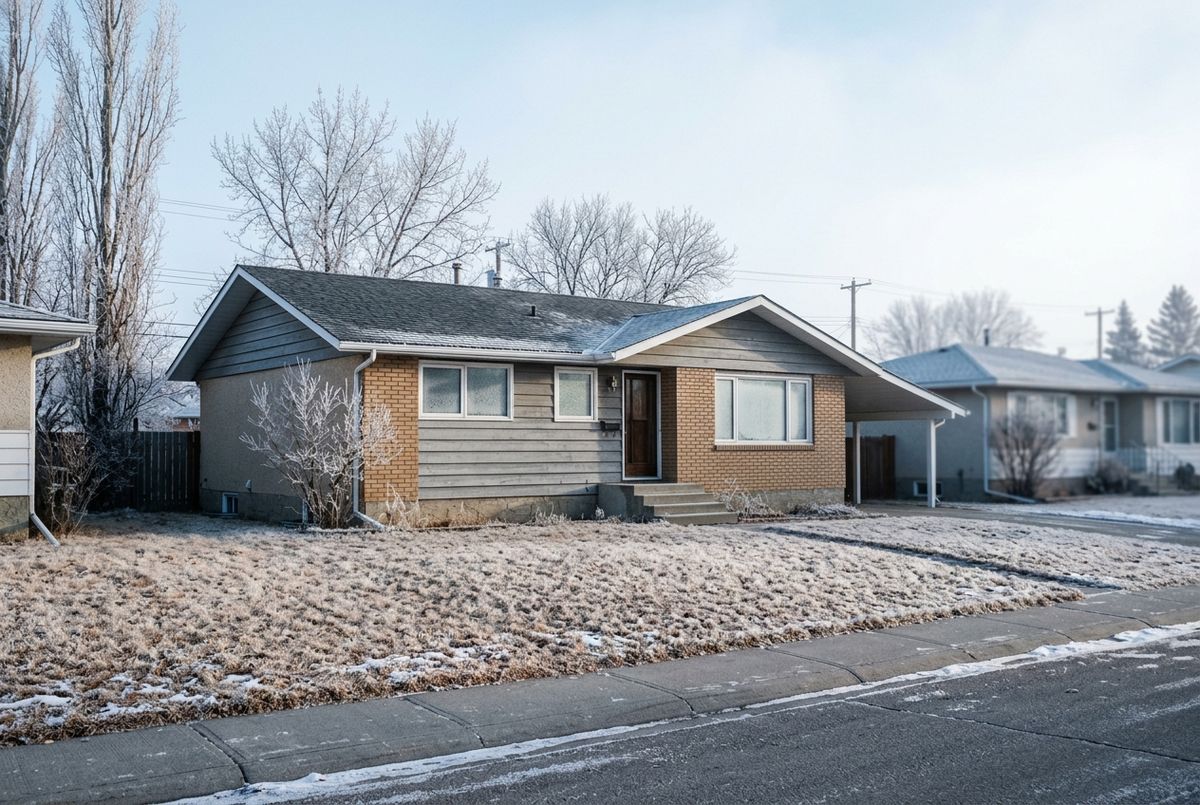
Water goes into the house fine. It just won't leave. The toilet fills and stalls, the tub gurgles when the washing machine drains, and eventually something comes up onto the basement floor — in the middle of a January cold snap. That combination isn't a hairball in the trap.
Short answer: A frozen sewer line is ice forming inside your drain line, usually in the buried run between the house and the property line. The tell is simple — you still have water coming in at every tap, but multiple fixtures on the lowest floor stop draining at once. It needs to be thawed mechanically, it's a same-day call in a cold snap because everything you run goes back onto your floor, and if it happens two winters running the pipe itself has a problem that thawing will never fix.
Backing up and it's below freezing? Don't keep running water.
Residential drain and sewer work across Calgary, including after hours in winter. Describe what's backing up and you'll get a straight read on whether this is a frozen line, an ordinary blockage or a City-side issue before anyone drives out.
[LICENCE / WCB / INSURANCE INFO] · [ADD REAL REVIEWS HERE]
Frozen sewer line or frozen water pipe? Tell them apart first
These get confused constantly, and the fixes have nothing in common. Two separate pipe systems cross your property line: a pressurised water service bringing clean water in, and a gravity sewer taking waste out. Either can freeze, and the symptoms are opposites.
| What you're seeing | Frozen supply line | Frozen sewer line |
|---|---|---|
| Water at the taps | None, or a dribble — that's the whole problem | Normal pressure everywhere |
| Draining | Fine, when there's water to drain | Slow, then stopped, then backing up |
| How many fixtures | Often just one, if it's an interior pipe | Several at once, always the lowest ones first |
| First sign | Tap sputters and dies | Toilet won't clear, floor drain or basement shower fills |
| Where the ice is | In a wall, crawl space, garage or the buried water service | In the buried drain line, or an exposed cleanout / stack |
| Can you DIY it | Sometimes — hair dryer, tap open, work back from the tap | Realistically no |
If that points you at the supply side, go to our frozen and burst pipe page — the thawing method there is genuinely doable. If drains are slow but nothing is frozen, it's an ordinary blockage and a drain cleaning job.
Stop using water while you work out which it is. Every flush and every load of laundry on a blocked sewer line has nowhere to go but back up through the lowest opening in the house — usually the basement floor drain. People routinely turn a manageable problem into a sewage cleanup by running the dishwasher to "test it."
Why sewer lines freeze in Calgary specifically
A sewer line is not pressurised and it is not full. It's a pipe with a shallow stream of warm wastewater running along the bottom a few times a day, and that warm flow is most of what keeps it clear in winter. Take the flow away, or let the line hold standing water, and ice builds from the bottom up until the pipe closes.
Not enough flow going down it
The biggest one. A house that's empty, mid-renovation, between tenants, or whose occupant is away for the holidays sends almost nothing down the line for days. Nothing warm passes through, frost keeps driving down from above, and the pipe closes from the inside. It's why the calls cluster in early January.
The line sits higher than the frost
Bury depth varies enormously across this city depending on when the house was built, whether the lot was re-graded, and whether a basement development or addition changed the run. A shallow section — often right where it leaves the foundation, or under a driveway — is the part that goes first.
Sag, belly or bad slope holding standing water
A drain line is supposed to fall continuously toward the main. Clay tile that has shifted, a section that settled as Calgary clay soil moved with the moisture cycle, or a badly bedded repair leaves a low spot — a "belly" — holding water permanently. Standing water in a cold pipe is exactly what freezes, and it's the most common reason a line goes every year.
A cold, dry winter with no snow on the ground
Counterintuitive but important: snow is insulation. A snowpack on the lawn and boulevard holds the frost line up, so a cold snap in a dry winter with bare brown grass drives frost noticeably deeper than the same temperatures with a foot of snow down. Dry cold winters are when these calls spike — and a driveway shovelled clean all season is the same effect over that stretch of pipe.
Why it's usually the same houses every year
Frozen sewer lines aren't random — it's a small set of addresses, and largely the same ones each winter. That pattern is the useful diagnostic. Freezing in consecutive winters, or freezing when the neighbours' lines don't, is the pipe telling you something structural: it's shallow, it has a belly holding water, it's partly collapsed, or roots and scale have narrowed it enough that flow can't clear it.
Here's the part most companies won't say out loud, because it costs them a repeat winter service call: thawing does not fix any of that. It restores flow for this week. If the reason the ice formed is a slope or depth problem, the pipe closes again on the next cold snap — and you pay again, probably at an after-hours rate, probably the same month.
- Camera it once it's thawed. A camera run shows standing water, sags, cracked or offset clay tile, root intrusion and where along the run the trouble sits — so the repair decision comes from evidence instead of a guess.
- Ask for the footage and the distance markers. A camera report that says "roots at 11 metres, standing water 14 to 17 metres" is something you can get a second quote against. "It's bad, needs replacing" is not.
- Locate before you dig. A camera with a sonde marks the exact spot on the ground, which usually means a targeted excavation rather than trenching the whole front yard. It's the same principle as locating a leak on the water side — find it first, dig once.
Buying an older Calgary house? This is the argument for a sewer scope before you close — a belly is invisible to a home inspector and expensive to inherit.
How a frozen sewer line actually gets thawed
Not with a hair dryer. The ice is in a buried pipe, usually five to twenty metres out from the foundation, so there's no getting heat to the outside of it. It gets thawed from the inside — through a cleanout, with a steam unit or hot-water jetting fed down the line until it eats through the plug.
That isn't rental gear, and it isn't a DIY job: live steam in a confined pipe with someone's hands at the cleanout is genuinely dangerous. Electric thawing — running current along the pipe to heat it — is worth refusing outright as well. It does nothing on plastic or clay, and a line in an older Calgary house is often a mix of materials, so there's no telling what the current is doing or where.
Do not pour anything down the drain to "melt" it. Not boiling water in volume, not salt, not chemical drain cleaner, not antifreeze. And if you've already tried drain cleaner, say so before anyone opens the cleanout — it's still sitting in there.
Expect the visit to run: locate and open a cleanout, thaw until flow returns, then run a good volume of water to confirm the line is genuinely clear rather than weeping through a pinhole in the ice. Ask for the camera run at the same visit, while the gear is already on site. On cost, our Calgary plumber rates page is blunt — no authoritative public pricing source exists here, and every published number is a company's self-report.
Is it your line or the City's?
Same boundary as everything else: builders or homeowners are responsible for providing the water and sewer service connections from the property line to the plumbing system, and The City's own wording is that anything installed on private property is owned by the homeowner and built at the homeowner's expense.
Source: The City of Calgary — Installing water and sewer connections
Where that boundary sits decides how much of the buried run is yours. In most cases, The City says, the property line ends a few metres from the edge of the curb or sidewalk — so most of the pipe crossing your front yard is on your side of it.
Source: The City of Calgary — Water service lines in Calgary
Call 311 anyway when sewage is backing up. The City's published sewer backup procedure has an agent determine whether the problem is your internal plumbing or possibly City infrastructure, which is worth establishing before you pay anyone to dig. Two things to know going in: City crews "will not move furniture, pull back carpet, remove toilets or make holes in drywall to identify the source of the backup," and if the blockage is on private property you'll be advised to call a plumber.
Source: The City of Calgary — Sewage backups
One signal worth passing on to 311: if neighbours on your block are backing up the same night, that points at the main. If it's only your house, it's very likely yours. Full ownership breakdown and what to say when you call is on our who-owns-which-pipe page.
Preventing it next winter
- Keep water moving through a vacant property. Someone running a hot tap and flushing the toilets on a real schedule, or the plumbing properly winterized and drained. Warm flow is the cheapest protection there is.
- Don't let the house go cold. The City's winter guidance is to "keep your thermostat set for at least 15°C" — that's aimed at the water service, but it helps here too, because a warm basement keeps the first stretch of drain line warm as it leaves the foundation.
- Insulate exposed cleanouts and any drain running through unheated space. A cleanout stub in a cold crawl space or an unheated garage is a direct path for cold into the line.
- Leave snow where it insulates. You don't need to shovel the lawn or the boulevard above the sewer run. Snow cover holds the frost line up.
- Fix the line, don't re-thaw it annually. Frozen twice? Budget for the repair the camera identifies.
- Know where your cleanout is before December. Behind boxes in the crawl space or buried under a deck? Find it now — hunting for it at 11 p.m. is time on the clock.
Thermostat guidance: The City of Calgary — Protect your water lines and meter from freezing. That page covers the water service, not the sewer; The City publishes no equivalent frozen-sewer guidance.
And if your basement has backed up before, frozen or not, that's the backwater valve conversation. It won't stop your line freezing, but it stops what comes back the other way.
Not sure whether it's frozen, blocked, or the City's problem
Describe the symptoms and you'll get an honest read — including whether your first call should be 311 instead of us. Straight answers are the whole point of this site.
Questions Calgary homeowners actually ask
How do I know it's frozen and not just plugged with the usual gunk?
Timing and temperature. An ordinary blockage builds up slowly — the drain gets lazy over weeks, one fixture at a time, and it doesn't care what month it is. A frozen line goes from fine to stopped over a day or two in the middle of a cold snap, and it takes several fixtures with it at once because the ice is out in the main run, not in a trap under a sink.
The other clue is what changed in the house. If nobody's been home, or you've had one person in a big house over the holidays, that's the classic setup — not enough warm water going down the line to hold the ice off. Same symptoms in July is a blockage, full stop.
Can I thaw it myself with boiling water or a garden hose?
No, and pouring things down a blocked line makes it worse. Boiling water doesn't have anything like enough heat to eat through a plug of ice a few metres out in a buried pipe, so all you've done is add scalding water to a line that's already backing up toward the basement floor drain. Salt and chemical drain cleaner do nothing to ice, and the cleaner then sits in the line as a hazard for whoever opens the cleanout.
Thawing a buried sewer needs steam or hot-water jetting fed down the pipe through a cleanout, and that gear isn't something you rent for the afternoon. The honest version is that this is one of the few plumbing jobs where the DIY answer is genuinely just "don't."
This is the second winter in a row. Why does it keep freezing?
Because thawing fixed the ice, not the reason the ice formed. A line that freezes repeatedly almost always has something structural going on: it's buried shallower than the frost gets in a dry Calgary winter, or it's got a sag — a belly — where the pipe settled and now holds standing water year-round. Standing water in a cold pipe is the thing that freezes.
Get a camera down it once flow is back, and ask for the distance markers, not just a verdict. Then you know whether you're looking at a spot repair at 12 metres or a full replacement, and you can get a second quote against the same evidence. Paying for an after-hours thaw every January is the expensive way to avoid finding out.
Nobody's living in the house this winter. What should I be doing?
Either keep water going down the drains on a real schedule — hot tap running for a few minutes and every toilet flushed, a couple of times a week, by an actual person who's in the building — or have the plumbing properly winterized and drained so there's nothing in it to freeze. Half-measures are what causes this.
Keep the heat at 15 °C or above too. That's the minimum The City publishes for protecting the water service line, and it keeps the first stretch of drain coming out of the foundation warm as well. And check the insurance angle before you leave: policies commonly have a vacancy clause about how often an empty home has to be checked, and it's a lot cheaper to read it in November than to argue about it in February.
Should I call 311 or a plumber first?
Call 311 when sewage is coming up into the house. The City's own backup process has an agent work out whether it looks like your internal plumbing or possibly City infrastructure, and that's worth establishing before you pay anyone to dig up the yard. If a couple of neighbours are backing up the same night, that's a strong sign it's the main and not you.
Know what the City will and won't do, though. Crews won't move furniture, pull back carpet, remove toilets or open drywall to hunt for the source, and if it turns out to be on your side of the property line they'll tell you to call a plumber. So realistically you're often making both calls — just make 311 the first one so you're not guessing about who owns the problem.
Does home insurance cover a frozen sewer line?
Depends entirely on your policy and on what actually got damaged. Sewer backup coverage is usually a separate add-on rather than something included by default, and the damage from raw sewage in a finished basement is the expensive part — not the thawing call. Dig out your policy and look for whether you have a sewer backup endorsement and what the limit is.
The part that trips people up is maintenance. Insurers generally treat gradual, preventable problems differently from sudden ones, so a line that's frozen three winters running with a known belly in it is a harder conversation than a one-off in a record cold snap. Another reason to fix the pipe rather than re-thaw it — and to keep the camera footage on file.